While headlines warn of risk, Nigeria’s $42 B reserves, 3.9% GDP growth and $20 B diaspora remittances paint a different picture—one that the market’s missing.

In this edition, I’ll walk you through a $1.4 B BDC arbitrage play and a 1‑acre poultry‑crop farm that turns $10 K into steady cash—real, remote, and backed by local execution.

You’ll learn how to spot these gaps, deploy your capital smartly, and join a growing cohort of diaspora investors turning small‑time ideas into big‑time returns.

Join me over a steaming bowl of jollof and let’s demystify the market together—no jargon, just facts, numbers and a dash of courage.


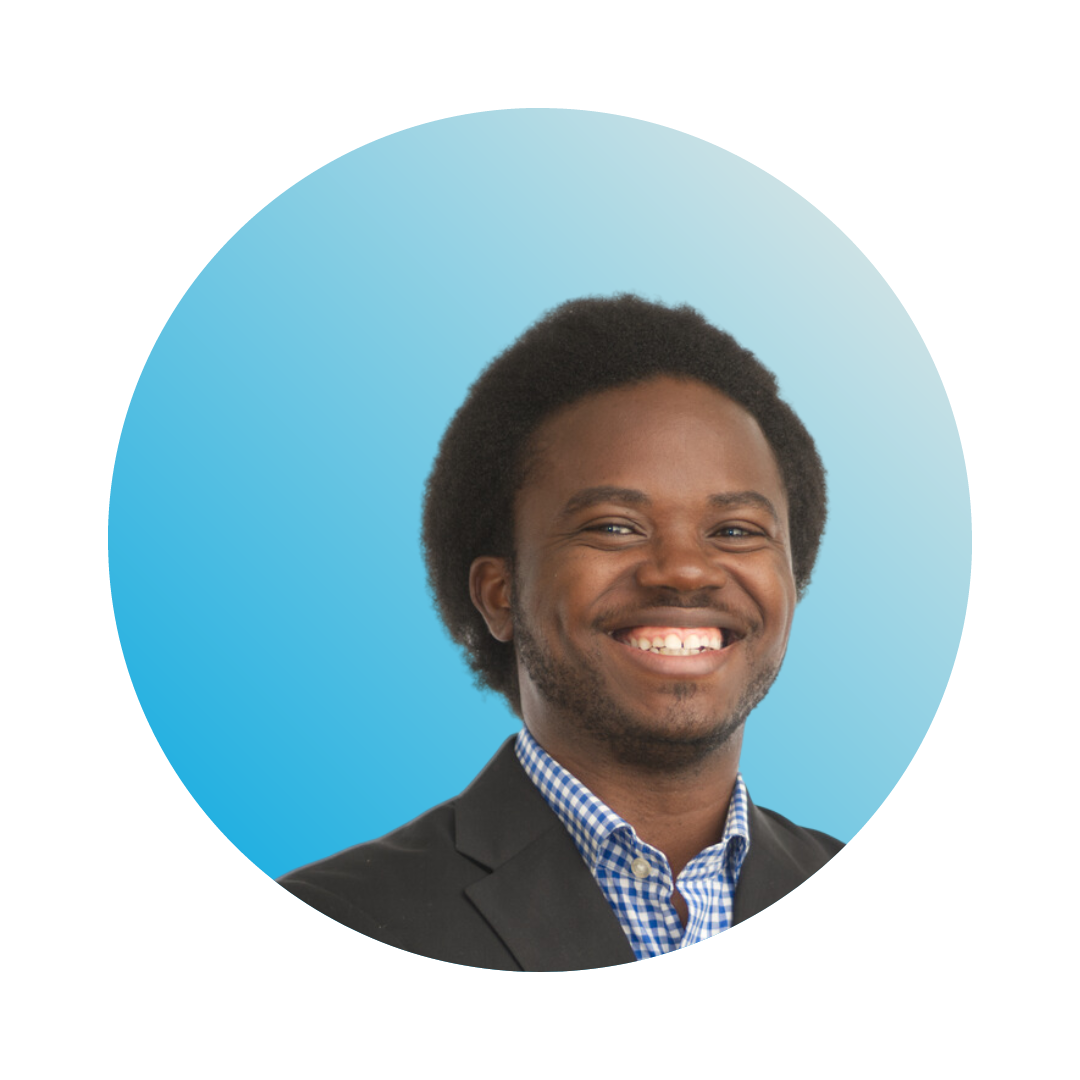
Dele Omotosho

Founder & MD @ Counseal

Husband & father of 2

Avid talking drummer

Let's Connect on LinkedIn


This Week's Notable Opportunity

Where diaspora capital meets local execution capability

$1.4B in 90 Days: Nigeria's Quiet Currency Play That's Beating Inflation

While everyone complains about naira volatility, Nigeria's central bank just pumped $1.4B into the BDC market in 90 days. The smart money? They're not running from the volatility — they're arbitraging it.

Here's the gap nobody talks about: official rate at ₦1,250, parallel at ₦1,350. That's 8% spread in a week. Diaspora remittances through licensed BDCs are capturing this spread legally, with $5K minimums and 48-hour settlement.

The real play isn't speculation — it's positioning as a micro-BDC. License costs ₦10M ($8K). With $50K working capital, you're processing $200K monthly at 3-5% margins. That's $6K-$10K monthly from a market the government's actively supporting.

Time concern? Setup takes 45 days if you know the process. Distance concern? 90% can be done remotely with a local compliance officer. The risk everyone's missing? Missing the window while CBN maintains this liquidity injection.

Let's discuss how you can tap into this opportunity →

Connect: Share your thoughts with us on X/Twitter, @deleconnects

Market Movements

📈 Industry Insights

Key sector updates and opportunities

86% of Africa’s CEOs Are Shopping: What They’re Buying Will Decide 2026

Forget oil rigs—Africa’s boardrooms are the hottest real estate right now. 86 % of CEOs say they’ll pull the trigger on a merger or acquisition in the next three years, up from 77 % last year. That’s not optimism; that’s a feeding frenzy.

The twist? They’re not hunting banks or factories. They’re shopping for AI-ready startups and regional tech plays that can plug three gaps at once: talent, data, and cross-border licenses. Nigeria’s TradeDepot just restructured to swallow smaller distributors; Kenya’s Sendy is flirting with every logistics app from Dakar to Durban. Translation: if your code can’t scale past one country, you’re lunch.

Why you should care: 26 % of these execs will spend over a fifth of their annual budget on AI this year—double the global average. The cheque writers aren’t waiting for perfect power or fibre; they’re buying teams that already hacked around the outages. If you’re raising Series A in Lagos or Cairo, valuation just got tied to how many languages your model can speak and how fast it can reroute when the grid dies.

Bottom line: the continent isn’t “adopting” AI—it’s acquiring it, company by company. Due diligence is now a coding test. Fail it, and you’re the target, not the bidder.

🤝 Deal Flow

Notable investments and partnerships

NVIDIA Bets on Cassava Technologies: Why Africa's AI Infrastructure Just Got Serious

NVIDIA just took a stake in Cassava Technologies. The amount's undisclosed, but the signal's clear — Africa's AI infrastructure is moving from concept to capital deployment.

Cassava operates data centres, cloud platforms, and connectivity across 94 countries. They're not just building one piece of the stack — they're vertically integrated from fiber to fintech. That's what caught NVIDIA's attention. The chipmaker needs local infrastructure to process AI workloads, and Cassava's planning a $720 million AI factory that NVIDIA will build.

Why it matters: This validates the thesis that Africa's next wave isn't consumer apps — it's infrastructure. When NVIDIA writes checks, they're positioning for compute demand that doesn't exist yet. Expect more capital flowing into data centres, cloud platforms, and AI processing capacity across the continent.

📊 Market Intelligence

Economic indicators and market trends

400,000 New Graduates, 0 Bank Credit: The ₦12 Trillion Gap Edun Wants Banks to Close

The Finance Minister just told banks to open the credit tap for 400,000 fresh graduates who enter the SME pool every year. Right now only 5% of small businesses get formal loans; the rest survive on family cash or street lenders at 40% interest.

Why the push? Nigeria’s GDP could jump ₦12 trillion if SMEs simply accessed half the credit large firms already enjoy. Edun’s message: quit asking for collateral banks can’t value—finance cash-flow potential instead.

What it means for you: If you run a start-up, expect new loan products tied to revenue history, not land titles. If you supply banks, pitch data tools that score “ambition” because that’s the next battleground for deposits. And if you’re an investor, watch for fintech-bank partnerships; whoever cracks SME underwriting first will book a chunk of that ₦12 trillion upside.

Featured Business

Featured business acquisition opportunity

Success Stories

Real wins from entrepreneurs building across borders

How Joseph Anya Got 1,000+ Nigerian Men to Pay for Help They’d Never Admit They Needed

Three years ago Joseph Anya saw a stat that made him uncomfortable: 68 % of Nigerian men with erectile dysfunction would rather self-medicate with roadside ‘man-power’ pills than talk to a doctor. The reason wasn’t cost—tele-consults already cost less than two beers—it was shame.

Instead of building a generic tele-health app, he built Priv Health like a dark kitchen for men’s problems. No waiting-room Zoom calls, no pharmacy queues. Users pick a complaint (ED, low-T, hair loss), pay ₦7,000, answer a 12-question form, and a licensed doctor sends a prescription to a partner pharmacist who repackages the drug in a plain courier box. First campaign? Instagram Stories with the line “Your phone is 100 % secure. Your ego should be too.” Cost ₦120 k, pulled in 300 paying users in 30 days.

Twelve months later Priv Health has 1,080 active subscribers, 52 % of whom told exit surveys it was the first time they’d ever discussed sexual health with anyone. Revenue run-rate is ₦90 M, gross margin 38 %, burn < ₦400 k/month. The lesson: in markets where stigma > price, anonymity is the product. Build the logistics of secrecy first, the medicine second.

Expert Corner

Insights from industry leaders and market specialists

Stop Chasing AI Hype—Start With the Data You Already Sit On

Bosun Tijani has one rule for the $3 trillion AI promise: if your data isn’t organised, you’re not in the race. Nigeria’s Minister of Digital Economy has watched too many founders burn cash on fancy models while their customer data still lives in Excel sheets.

Here’s the kicker: 76 % of African countries now have data-protection laws, yet only 5 % of AI talent can access decent compute. That gap is your edge. The startups actually raising follow-on rounds are the ones that spent the first six months cleaning, labelling and storing their data like it was crude oil—because that’s exactly what it is.

Before you hire that machine-learning PhD, audit your data exhaust: transaction logs, delivery routes, customer-support tickets. Pick one dataset, get it compliant, and plug it into an open-source model. The moment you can show predictive value, investors open their wallets and government sandboxes invite you in. Data first, algorithms second—otherwise you’re just doing expensive PowerPoint.